

When floodwater enters a home or commercial property, every minute matters. Emergency flood cleanup is not simply about removing visible water. Instead, it involves controlling moisture, protecting valuable belongings, reducing secondary damage, and restoring the affected property as safely and efficiently as possible. Because standing water can quickly affect flooring, walls, furniture, electrical systems, and other structural components, professional assistance can make a major difference.
At Express Emergency Services, we understand how overwhelming unexpected flooding can be. Therefore, our approach focuses on responding quickly, assessing the affected areas, removing water, managing moisture, and helping property owners move toward complete recovery. Whether the flooding comes from a burst pipe, appliance failure, heavy rainfall, overflowing drainage, or another water-related emergency, prompt action is essential.
Moreover, flood damage can continue even after the water appears to be gone. Hidden moisture may remain underneath flooring, behind walls, or inside other materials. Consequently, professional emergency flood cleanup should address both visible water and concealed moisture.
Why Emergency Flood Cleanup Requires Immediate Attention
Floodwater does not remain harmless simply because it is standing still. In fact, water can spread through porous materials surprisingly quickly. As a result, carpets, drywall, wood, insulation, furniture, and other surfaces may absorb moisture.
Furthermore, prolonged moisture can create conditions that encourage unpleasant odors and microbial growth. Therefore, delaying cleanup can potentially make restoration more complicated and expensive.
Professional emergency cleanup helps property owners respond systematically.
Most importantly, quick action can help limit the overall impact.
What Is Emergency Flood Cleanup?
Emergency flood cleanup is the immediate process of responding to a property affected by unwanted water or flooding. It generally involves several stages rather than one simple water-removal task.
Depending on the situation, the process may include:
- Inspecting the affected property
- Identifying the source of the water
- Removing standing water
- Extracting moisture from carpets and flooring
- Drying affected areas
- Using air movement and dehumidification
- Assessing damaged materials
- Cleaning affected surfaces
- Addressing odors
- Documenting visible damage
- Preparing the property for restoration
Additionally, the exact cleanup strategy depends on the amount of water, affected materials, source of the water, and duration of exposure.
Common Causes of Flooding and Water Damage
Flooding can happen unexpectedly. Therefore, property owners should understand some of the most common causes.
For example, plumbing failures can release large quantities of water within a short period. Similarly, washing machine hoses, water heaters, dishwashers, toilets, and supply lines can fail without warning.
Heavy rain can also overwhelm drainage systems and allow water to enter buildings. Likewise, roof leaks, foundation problems, clogged gutters, and drainage failures may contribute to water intrusion.
In commercial properties, flooding can additionally result from HVAC problems, sprinkler system failures, plumbing infrastructure, or equipment malfunctions.
Regardless of the cause, the priority should be stopping the water source when safely possible and beginning professional cleanup promptly.
FAQ: Emergency Flood Cleanup Questions Property Owners Ask
How quickly should flood cleanup begin?
Ideally, cleanup should begin as soon as it is safe to enter the property. The longer water remains, the more opportunity it has to penetrate materials and create additional problems. Therefore, contacting a professional service promptly is a smart first step.
Can I clean up a flooded room myself?
Small, clean-water incidents may sometimes be manageable with basic equipment. However, significant flooding can involve hidden moisture, contaminated water, electrical hazards, or structural concerns. Consequently, professional assessment is recommended when the damage is extensive or the water source is uncertain.
Does removing standing water solve the problem?
Not necessarily. Although extraction removes visible water, moisture may remain in flooring, walls, insulation, furniture, and other materials. Therefore, drying and moisture assessment are important parts of a complete cleanup.
How long does emergency flood cleanup take?
The timeframe varies according to the size of the affected area, the amount of water, the materials involved, and environmental conditions. Consequently, a professional assessment is needed to establish a realistic timeline.
Can floodwater damage hardwood floors?
Yes. Wood can absorb moisture, which may lead to swelling, warping, staining, or other damage. However, the outcome depends on factors such as the type of flooring, exposure duration, and how quickly drying begins.
What should I do immediately after flooding?
First, prioritize safety. If there is standing water near electrical systems, do not enter the area until it has been determined safe. Next, stop the water source if you can do so safely. Then, contact a professional emergency cleanup service.
Why Standing Water Should Never Be Ignored
Standing water can look like a temporary inconvenience. However, it can become a much larger property issue if left untreated.
For instance, water may move beneath flooring or into wall cavities. Likewise, carpets can retain substantial amounts of moisture even after surface water has disappeared.
Additionally, furniture may absorb water from the bottom upward. Wooden components can swell, while certain building materials can lose their strength or integrity after prolonged exposure.
Because of this, professional emergency flood cleanup goes beyond simply using a wet vacuum. Instead, the goal is to identify where moisture has traveled and develop an appropriate drying strategy.

Professional Water Extraction Makes a Difference
Water extraction is one of the most important early steps following a flood. Naturally, removing water quickly can help reduce the time that materials remain saturated.
Professional equipment can often remove water more efficiently than household tools. As a result, cleanup teams can focus on extracting moisture from carpets, floors, and other affected areas.
Moreover, extraction should be followed by appropriate drying. Otherwise, residual moisture can remain even when surfaces appear dry.
Therefore, water removal and structural drying should be considered connected parts of the cleanup process.
Structural Drying After Flood Damage
Once standing water has been removed, the drying process becomes especially important.
Moisture can hide in locations that are difficult to see. For example, it may remain underneath flooring, behind baseboards, inside wall cavities, or beneath furniture.
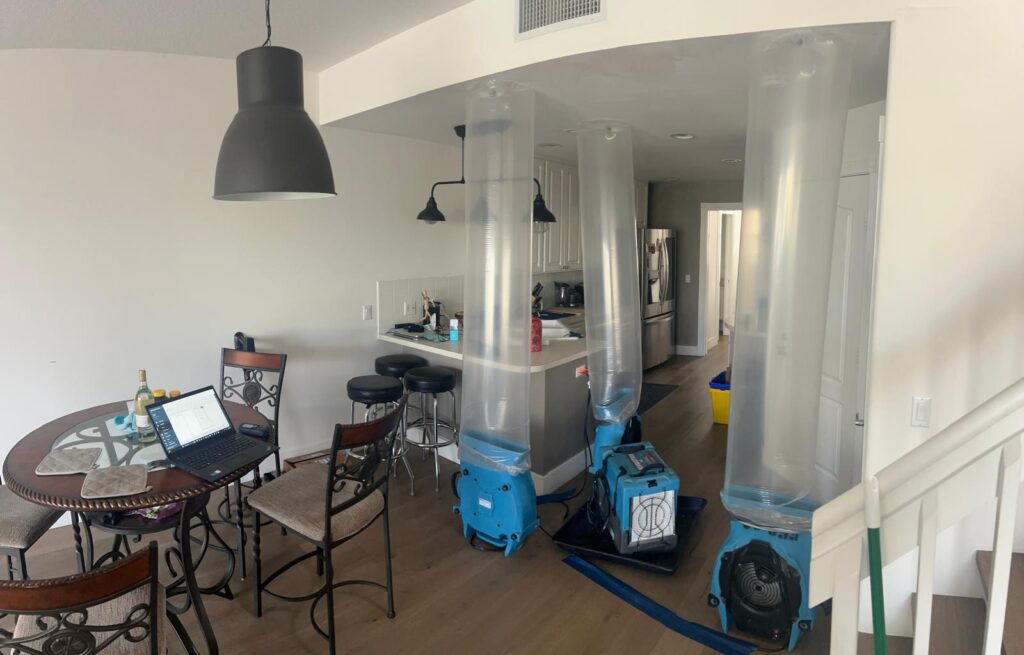
Consequently, professional drying may involve air movers and dehumidification equipment. These tools can help improve air circulation and reduce excess moisture.
Furthermore, monitoring conditions during the drying process can help determine whether affected areas are progressing toward appropriate dryness.
At Express Emergency Services, the objective is not merely to make a property look dry. Instead, the focus is on addressing moisture that may otherwise remain hidden.
Emergency Flood Cleanup for Residential Properties
A flooded home can disrupt everyday life immediately. Bedrooms, kitchens, bathrooms, basements, living rooms, and utility areas can all be affected.
For homeowners, the situation can be especially stressful because personal belongings may also be involved. Therefore, cleanup should be organized carefully.
First, affected areas should be assessed. Next, water should be removed where appropriate. Then, furniture and belongings may need to be moved or separated to facilitate drying.
Additionally, damaged materials should be evaluated rather than automatically discarded. In some situations, certain items may be cleanable or restorable.
As a result, professional guidance can help homeowners make more informed decisions during an already difficult situation.
Emergency Flood Cleanup for Commercial Properties
Flooding can be particularly disruptive for businesses. Even a relatively localized water incident can affect offices, retail areas, warehouses, restaurants, storage spaces, or customer areas.
Furthermore, business interruptions can create operational challenges. Therefore, rapid response becomes especially valuable.
Professional cleanup can help organize the recovery process so that affected areas are addressed systematically. Depending on the circumstances, the work may focus on water extraction, drying, cleaning, moisture management, and preparation for repairs.
Ultimately, the goal is to help the property move toward normal operation as efficiently as practical.
Handling Flood Damage to Different Materials
Different materials react differently to water. Therefore, cleanup should not treat every surface in exactly the same way.
Carpet: Carpet can retain significant moisture and may require professional extraction and drying.
Hardwood: Wood flooring can absorb water and potentially swell or warp.
Drywall: Drywall may absorb moisture, especially when exposed for an extended period.
Tile: Tile itself may resist water better, although moisture can still reach grout, subflooring, and surrounding materials.
Furniture: Upholstered furniture can hold substantial moisture internally.
Insulation: Certain insulation materials may require careful evaluation after significant water exposure.
Because each material behaves differently, a professional assessment can help determine the appropriate response.
Signs Your Property Needs Professional Flood Cleanup
Sometimes the need for professional help is obvious because several inches of water are covering the floor. However, other situations are less noticeable.
Watch for signs such as:
- Persistent damp or musty odors
- Wet carpets or padding
- Swollen flooring
- Discoloration on walls or ceilings
- Peeling paint
- Soft drywall
- Water stains
- Moisture beneath flooring
- Unexpected humidity
- Water pooling around appliances
- Visible mold-like growth
If any of these signs appear following a water incident, professional evaluation may be appropriate.
Why Fast Response Matters After a Flood
Timing is one of the most important elements of successful water damage management. Generally, the sooner affected areas are addressed, the better the opportunity to limit prolonged moisture exposure.
For example, water that remains on a floor for hours can continue moving into surrounding materials. Similarly, moisture trapped inside enclosed spaces can remain unnoticed.
Therefore, early intervention can potentially reduce the scope of the cleanup.
At Express Emergency Services, our name reflects an important principle: emergency water problems deserve an organized and timely response.
The Emergency Flood Cleanup Process
A professional cleanup process typically follows a logical sequence.
Step 1: Initial Assessment
The affected property is evaluated to understand the extent and nature of the water intrusion.
Step 2: Source Identification
When possible, the source of the water should be stopped or controlled before extensive cleanup begins.
Step 3: Water Removal
Standing water is extracted using appropriate equipment.
Step 4: Moisture Evaluation
Affected areas are assessed for remaining moisture, including areas that may not be visibly wet.
Step 5: Drying
Air movement and dehumidification can be used as appropriate to support structural drying.
Step 6: Cleaning
Affected surfaces and belongings can be cleaned based on their condition and the type of water involved.
Step 7: Restoration Planning
Finally, damaged materials may be evaluated for repair, replacement, or additional restoration.
This structured approach helps prevent important steps from being overlooked.
Why Professional Equipment Is Important
Household fans and towels may help with a very small spill. However, significant flooding requires considerably more capability.
Professional restoration equipment is designed to move larger quantities of water and manage moisture more effectively. Furthermore, specialized equipment can support drying in areas that ordinary household devices cannot adequately reach.
Therefore, professional equipment can make the cleanup process more systematic and efficient.
Safety Comes First During Flood Cleanup
Floodwater can create hazards that are not always visible. For example, water may come into contact with electrical systems. Additionally, contaminated water can pose sanitation concerns.
Therefore, property owners should avoid unnecessary exposure and should not enter dangerous areas simply to retrieve belongings.
If electrical hazards, sewage contamination, structural instability, or other serious concerns are suspected, professional assistance is particularly important.
Above all, never sacrifice personal safety to save property.
Preventing Future Flood Damage
Although no property can be completely protected from every emergency, preventive maintenance can reduce certain risks.
For example, property owners can regularly inspect plumbing connections, water heaters, appliances, gutters, drainage systems, and roofing.
Additionally, knowing where the main water shutoff is located can help homeowners respond faster to plumbing emergencies.
Businesses can also benefit from routine maintenance and emergency response planning.
Consequently, preparation can make a significant difference when an unexpected water incident occurs.
Why Choose Express Emergency Services?
Choosing the right emergency cleanup company matters because water damage can involve more than what is visible.
Express Emergency Services focuses on responsive emergency assistance and practical water damage solutions. Moreover, our approach emphasizes careful assessment, efficient water removal, drying, cleaning, and restoration planning.
We understand that property owners need clear communication during stressful situations. Therefore, our goal is to provide a straightforward process from the initial response through the next stage of recovery.
Whether the property is residential or commercial, we approach each situation according to its specific conditions rather than relying on a one-size-fits-all solution.
Emergency Flood Cleanup You Can Rely On
Flooding can happen at any time, and unfortunately, it rarely happens at a convenient moment. Nevertheless, taking prompt action can help prevent a stressful situation from becoming an even larger property problem.
From standing water and saturated flooring to hidden moisture and damaged materials, every part of the situation deserves attention. Furthermore, professional emergency flood cleanup can provide the equipment, experience, and organized process needed to address water damage efficiently.
Express Emergency Services is ready to help property owners take the next step after an unexpected flood.
Contact Express Emergency Services Today
When floodwater enters your property, waiting can allow moisture problems to spread. Instead, take action as soon as it is safe to do so.
Express Emergency Services provides professional emergency flood cleanup designed to help homeowners and businesses recover from unexpected water damage. From initial assessment and water extraction to drying and cleanup, our team can help guide the property toward restoration.
If your property has experienced flooding or unexpected water damage, contact Express Emergency Services today for professional assistance and a clear path toward recovery.